Apple Store Promo Codes ( Apple Store Coupon Codes) May 2026 Canada
Apple Store Coupon Codes Canada ⭐ Coupons with ♥ from Vancouver » Coupons up to ⭐ 1 deals and Apple Store Promo Codes » Valid May 2026 » Coupons & Deals daily updated ♥ 100% checked! Already 1 times used today!
- All
- Top Offers
- Coupon codes
- % Discount
- $ Discount
- Free shipping
- Deals
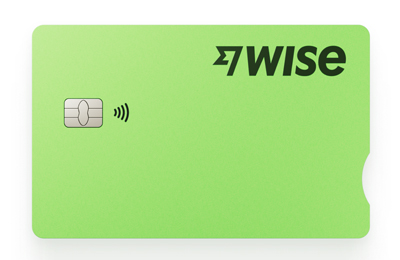
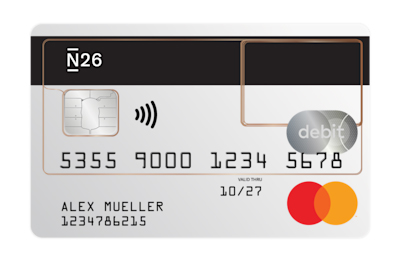
Save even more with free debit cards like Wise and N26. They help you avoid extra fees, manage online payments, and shop more efficiently, especially at international stores.
The name Apple was to cause Apple problems in later years as it was uncomfortably similar to that of the Beatles' publisher, Apple Corps, but its genesis was innocent enough.
Speaking to Byte magazine in December 1984, Woz credited Jobs with the idea. "He was working from time to time in the orchards up in Oregon. I thought that it might be because there were apples in the orchard or maybe just its fructarian nature. Maybe the word just happened to occur to him. In any case, we both tried to come up with better names but neither one of us could think of anything better after Apple was mentioned."
According to the biography of Steve Jobs, the name was conceived by Jobs after he returned from apple farm. He apparently thought the name sounded 'fun, spirited and not intimidating.'
The name also likely benefitted by beginning with an A, which meant it would be nearer the front of any listings.
The Apple Logo
There are other theories about the meaning behind the name Apple. The idea that it was named thus because Newton was inspired when an Apple fell out of a tree hitting him on the head, is backed up by the fact that the original Apple logo was a rather complicated illustration of Newton sitting under a tree.
Later the company settled on the bite out of an Apple design for Apple's logo - a far simpler logo design. These logos are probably the reason for other theories about the meaning behind the name Apple, with some suggesting that the Apple logo with a chunk taken out of it is a nod at computer scientist and Enigma code-breaker, Alan Turing, who committed suicide by eating a cyanide infused apple.
However, according to Rob Janoff, the designer who created the logo, the Turing connection is simply "a wonderful urban legend."
Equally the bite taken out of the Apple could represent the story of Adam and Eve from the Old Testament. The idea being that the Apple represents knowledge.
Selling the Apple I
Woz built each computer by hand, and although he'd wanted to sell them for little more than the cost of their parts - at a price at that would recoup their outlay as long as they shipped 50 units - Jobs had bigger ideas.
Jobs inked a deal with the Byte Shop in Mountain View to supply it with 50 computers at $500 each. This meant that once the store had taken its cut, the Apple I sold for $666.66 - the legend is that Wozniak liked repeating numbers and was unaware of the 'number of the beast' conection.
Byte Shop was going out on a limb: the Apple I didn't exist in any great numbers, and the nascent Apple Computer Inc didn't have the resources to fulfil the order. Neither could it get them. Atari, where Jobs worked, wanted cash for any components it sold him, a bank turned him down for a loan, and although he had an offer of $5,000 from a friend's father, it wasn't enough.
In the end, it was Byte Shop's purchase order that sealed the deal. Jobs took it to Cramer Electronics and, as Walter Isaacson explains in Steve Jobs: The Exclusive Biography, he convinced Cramer's manager to call Paul Terrell, owner of Byte Shop, to verify the order.
"Terrell was at a conference when he heard over a loudspeaker that he had an emergency call (Jobs had been persistent). The Cramer manager told him that two scruffy kids had just walked in waving an order from the Byte Shop. Was it real? Terrell confirmed that it was, and the store agreed to front Jobs the parts on thirty-day credit."
An original Apple
Jobs was banking on producing enough working computers within that time to settle the bill out of the proceeds from selling completed units to Byte Shop. The risk involved was too great for Ronald Wayne, and it's ultimately this that saw him duck out.
"Jobs and Woz didn't have two nickels to rub together," Wayne told NextShark in 2013. "If this thing blew up, how was that… going to be repaid? Did they have the money? No. Was I reachable? Yes."
Family and friends were roped in to sit at a kitchen table and help solder the parts, and once they'd been tested Jobs drove them over to Byte Shop. When he unpacked them, Terrell, who had ordered finished computers, was surprised by what he found.
As Michael Moritz explains in Return to the Little Kingdom, "Some energetic intervention was required before the boards could be made to do anything. Terrell couldn't even test the board without buying two transformers… Since the Apple I didn't have a keyboard or a television, no data could be funnelled in or out of the computer. Once a keyboard had been hooked to the machine it still couldn't be programmed without somebody laboriously typing in the code for BASIC since Wozniak and Jobs hadn't provided the language on a cassette tape or in a ROM chip… finally the computer was naked. It had no case."